
Best Decking Material for Seattle's Wet Climate: Cedar, Composite, IPE & PVC Compared
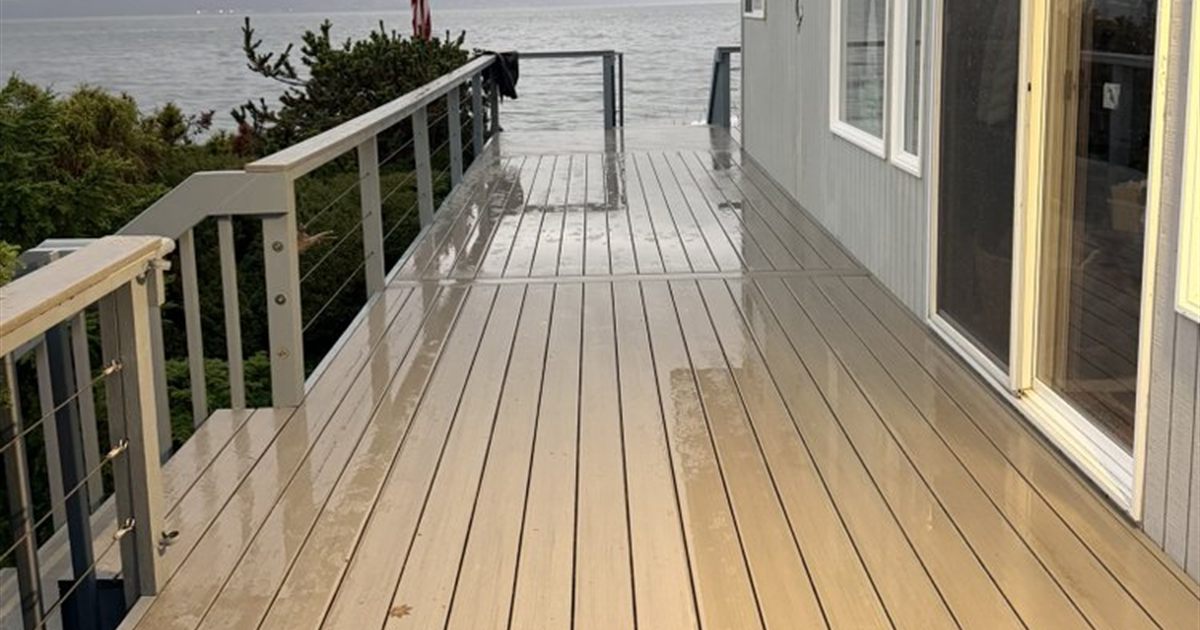
The best decking material for a wet climate like Seattle’s is the one that handles 37 inches of rain a year without rotting, cupping, or turning into a maintenance project every spring. For most Seattle homeowners, that’s capped composite, with cedar, IPE hardwood, and PVC each winning in specific situations. After 1,250+ decks across Seattle since 2008, we’ve watched every one of these materials age through real PNW winters, and this guide compares them the way we’d explain it standing in your backyard.
Here’s the short version before we get into the details:
| Cedar | Composite | IPE | PVC | |
|---|---|---|---|---|
| Installed cost (typ. Seattle) | $ | $$ | $$$$ | $$$ |
| Lifespan | 15–25 yrs | 25–30 yrs | 50–75 yrs | 30–50 yrs |
| Maintenance | Re-stain every 2–3 yrs | Soap-and-water wash | Oil 1–2×/yr (optional) | Soap-and-water wash |
| Rot risk in Seattle rain | Moderate (needs upkeep) | Very low | Very low | None (no wood at all) |
| Look | Real wood, warm | Wood-look, improving | Best-in-class hardwood | Wood-look, uniform |
| Best for | Budget + real wood feel | Most Seattle homes | Forever decks, waterfront | Rooftops, waterfront, shade/moss zones |
Now the honest breakdown of each, and the deep-dive comparisons if you’re already down to two finalists.
Western Red Cedar: The PNW Classic
Cedar has been the default Seattle deck board for a century, and for good reason, it grows here, it’s naturally rot-resistant, and nothing engineered fully matches the look and smell of real wood. The Western Red Cedar Lumber Association rates it among the most naturally durable softwoods available, and at roughly $35–$60 per square foot installed, it’s usually the least expensive way to get a quality deck built in Seattle.
The catch is the maintenance contract you’re signing with yourself. In our climate, cedar needs cleaning and re-staining every 2–3 years, no exceptions. Skip two cycles and you’ll see gray checking, then soft spots where water sits, especially on shaded north-side decks in neighborhoods like Wedgwood or Maple Leaf where moss never really leaves. Maintained well, a cedar deck gives you 15–25 years. Neglected, we’ve replaced cedar decks at year 12.
If you’re torn between real wood and low maintenance, our cedar vs. composite comparison runs the full numbers, and our cedar deck building service covers how we spec cedar to survive Seattle rain, stainless fasteners, proper gapping, and ventilation underneath.
Composite: The Default Answer for Most Seattle Homes
Capped composite (a wood-flour-and-plastic core wrapped in a polymer shell) is what roughly two-thirds of our Seattle clients choose now, and it’s the material we’d put on most of our own houses. The case is simple:
- Rain doesn’t bother the cap. The polymer shell doesn’t absorb water, so the rot, cupping, and splintering that kill wood decks here just don’t happen.
- Maintenance is a hose and a brush. No staining, ever. In Seattle that difference compounds: every wood deck needs a dry 3-day window to re-stain, and our calendar doesn’t hand out many of those.
- Warranties are real. Major brands back their boards for 25–50 years against fade and staining, transferable to the next owner.
Expect $45–$85 per square foot installed depending on board line and framing. The honest downsides: it costs more than cedar upfront, dark boards get hot in direct summer sun, and up close it still reads as engineered rather than real wood. We break all of this down without the sales gloss in composite decking pros and cons.
Brand matters less than people think, but line matters a lot, a premium capped board and a bargain-bin composite age very differently in constant moisture. If you’re comparing the two biggest names, read Trex vs. TimberTech. Our composite deck building page covers the lines we install as a TrexPro Platinum and TimberTech Pro certified crew, including Trex installation and TimberTech builds.
IPE: The 50-Year Deck
IPE (pronounced ee-pay) is a Brazilian hardwood so dense it barely floats. It’s roughly three times harder than oak, naturally immune to rot and insects, and carries a Class A fire rating, the same class as concrete. An IPE deck in Seattle will outlast the fasteners holding it down: 50–75 years is a realistic service life.
You pay for it twice. First in money (full IPE projects in Seattle typically run $28,000–$65,000) and second in labor, because the wood is heavy and hard enough that every board gets pre-drilled. Left alone, IPE weathers to an even silver-gray that many waterfront owners love; if you want to keep the deep chocolate color, plan on oiling once or twice a year.
We’d call IPE the best deck material in Seattle, full stop, if budget weren’t a factor. See how it stacks up against engineered boards in IPE vs. composite, or our IPE hardwood deck service for build specifics.
PVC: Zero Wood, Zero Rot
PVC decking contains no wood at all, it’s 100% synthetic, which means there is literally nothing in the board for moisture to attack. That’s not marketing; it’s chemistry. For the wettest situations Seattle can throw at a deck, PVC is the technically correct answer:
- Rooftop decks in Capitol Hill and Belltown, where the boards sit over a waterproof membrane and weight matters (PVC is ~40% lighter than composite)
- Waterfront decks in Alki or Madison Park taking salt spray
- Deep-shade decks that stay damp from October to May and grow moss on anything organic
It runs $55–$95 per square foot installed (more than composite) and premium PVC lines now look far better than the shiny plastic boards of a decade ago. Whether that premium is worth it for a standard backyard deck is exactly what we cover in PVC vs. composite, and our PVC deck building page has the details on the lines we install.
What Seattle Rain Changes (Whatever Material You Pick)
This is the part most material guides skip: in a climate with 150+ rainy days a year, the build details decide as much as the board.
Fasteners: galvanized coatings fail in constant moisture and leave black streaks bleeding from every screw head within a few years. We use stainless steel fasteners and hangers on every Seattle deck, on every material. It’s a small line item that prevents the most common failure we see on other builders’ decks.
Gapping and drainage: boards need proper side gaps so water drains instead of ponding, and the framing underneath needs airflow. A perfect board over a poorly ventilated frame still fails, the joists rot out from under it. Joist tape over the framing is cheap insurance we consider standard, not an upgrade.
Framing: even under composite or PVC boards, the structure is still pressure-treated wood. Protecting it is why our 10-year structural warranty means something.
Industry groups like the North American Deck and Railing Association recommend an annual deck inspection regardless of material, in Seattle’s climate, we’d call that a minimum.
The 25-Year Cost Picture
Upfront price is the number everyone shops on, but it’s the least useful one. Here’s what a typical 300 sq ft Seattle deck actually costs over 25 years of ownership, including realistic maintenance:
| Upfront (installed) | Maintenance over 25 yrs | 25-year total | Still standing at yr 25? | |
|---|---|---|---|---|
| Cedar | $10,500–$18,000 | $6,000–$12,000 (8–12 staining cycles) | $16,500–$30,000 | Only if maintained |
| Composite | $13,500–$25,500 | ~$500 (cleaning supplies) | $14,000–$26,000 | Yes, under warranty |
| IPE | $28,000–$50,000+ | $0–$4,000 (optional oiling) | $28,000–$54,000 | Yes, barely middle-aged |
| PVC | $16,500–$28,500 | ~$500 | $17,000–$29,000 | Yes, under warranty |
Two things jump out of that table. First, cedar’s upfront advantage mostly evaporates once you price the staining it will need here, and that assumes you actually do it. Second, composite and PVC’s totals barely move after day one, which is exactly why they dominate in this climate: the price you’re quoted is close to the price you’ll ever pay.
One caveat that keeps the table honest: cedar’s maintenance line assumes professional staining. If you genuinely do it yourself, on schedule, for 25 years, cedar stays the cheapest option. In seventeen years of tear-offs, we can count the decks where that actually happened on one hand.
Your Site Matters More Than the Showroom
The same four materials rank differently depending on where in Seattle the deck lives, and this is the part a material chart can’t tell you:
- South- or west-facing, full sun (Ballard, West Seattle view lots): heat becomes the issue, not moisture. Lighter composite colors or PVC; cedar also performs well here because it dries fast.
- North-facing or under evergreens (Wedgwood, Maple Leaf, Shoreline edges): the deck may not fully dry from October to May. This is where cedar maintenance gets punishing and where capped composite or PVC earn their price.
- Waterfront (Alki, Madison Park, Lake Washington): salt spray, constant humidity, and big UV exposure. PVC or IPE, with stainless everything.
- Rooftop (Capitol Hill, Belltown, First Hill): weight and membrane compatibility rule the decision, PVC, almost every time.
We’ve built in all 58 Seattle neighborhoods, and the honest answer to “what’s the best material” has changed street by street more often than you’d think.
So Which Material Should You Pick?
- Choose cedar if budget leads, you love real wood, and you’ll genuinely keep up with staining every 2–3 years.
- Choose composite if you want the best value over 25 years and a deck you wash instead of maintain. This is the right answer for most Seattle homes.
- Choose IPE if this is your forever house and you want a deck your grandkids inherit.
- Choose PVC if the deck is on a rooftop, over water, or in deep shade where moisture never lets up.
Frequently Asked Questions
What is the best decking material for a wet climate?
Capped composite is the best all-around decking material for a wet climate, the polymer shell blocks moisture absorption, so it won’t rot, and it needs no staining. PVC is even more moisture-proof (it contains no wood at all) and wins for rooftop and waterfront decks, while IPE hardwood is the most durable natural option.
How long does a deck last in Seattle?
With proper construction: cedar 15–25 years (if re-stained every 2–3 years), composite 25–30 years, PVC 30–50 years, and IPE 50–75 years. The framing underneath matters as much as the boards, poorly ventilated framing can fail decades before the deck surface does.
Is composite decking worth the extra cost over cedar?
Usually, yes. Cedar costs less upfront, but every re-staining cycle costs $700–$2,000 (or a weekend of your time), every 2–3 years, for the life of the deck. Over 25 years, composite typically ends up cheaper in Seattle, and you never have to find a dry weekend to stain.
Do I need a permit to build a deck in Seattle?
Most elevated decks in Seattle require an SDCI permit; low platform decks close to grade can be exempt. Rules change and lot specifics matter, so verify with SDCI, or work with a builder who handles it. We’ve pulled Seattle deck permits in-house since 2008.
What’s the biggest deck-building mistake in the Seattle climate?
Cheap fasteners and no ventilation. Galvanized screws corrode and streak in constant moisture, and a deck built tight to the ground with no airflow rots from beneath, regardless of how premium the boards are. Stainless fasteners, correct gapping, and joist protection matter as much as the material.
Talk It Through With a Seattle Crew
Every material above has a right home, the wrong choice is the one picked from a showroom sample instead of your actual site, sun exposure, and budget. We’ve built with all four across all 58 Seattle neighborhoods, we’re licensed (WA #DBSEAT123KP), bonded, and insured, and every build carries a 10-year transferable structural warranty.
Call (425) 928-1172 for a free same-day on-site quote, we’ll look at your site and tell you which material we’d put on our own house if we lived there.