
IPE vs. Composite Decking: Cost, Look, and Lifespan
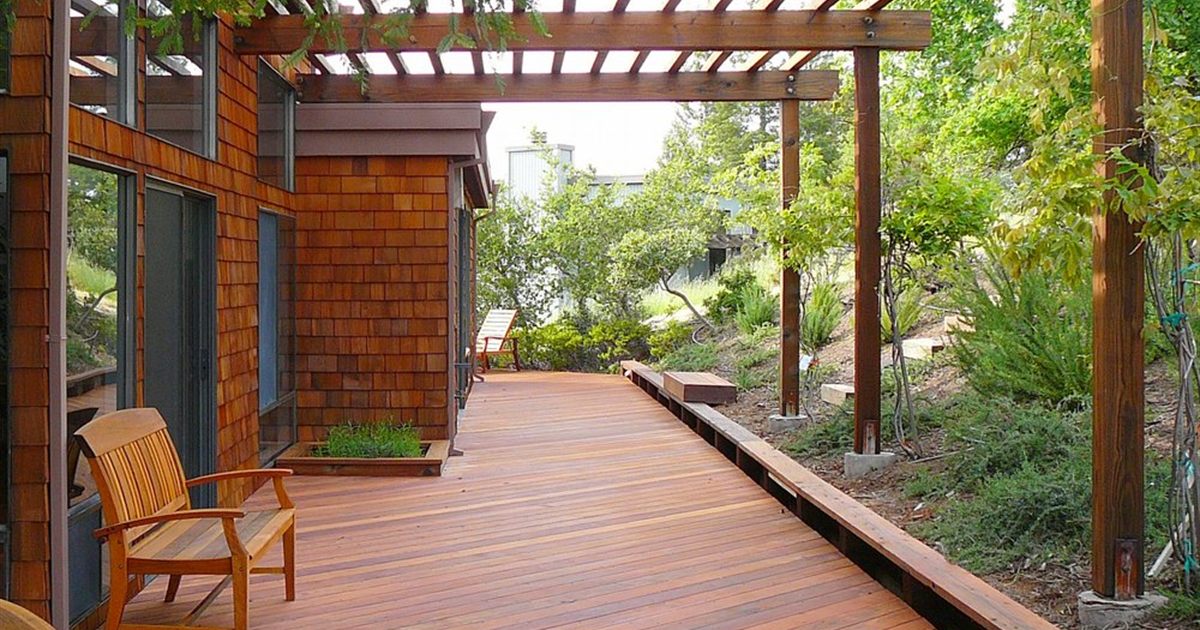
IPE vs composite is really a choice between the best deck board nature makes and the best one a factory makes. IPE (a Brazilian hardwood dense enough to sink in water) will outlive your mortgage, your roof, and probably the house’s next two owners. Composite will never ask you for a weekend of maintenance and comes with a warranty document instead of a legacy. Both handle Seattle’s 37 inches of annual rain better than almost anything else you can put on a deck frame. We’ve installed both across Seattle since 2008; here’s how to decide between them.
What Makes IPE Different From Every Other Wood
Numbers first, because IPE’s are absurd:
- Janka hardness around 3,500 lbf, roughly 3× oak, 8× cedar. You pre-drill every screw hole because ordinary fasteners snap.
- 50–75 year lifespan, untreated, in wet climates. Sections of the Coney Island boardwalk built with IPE lasted the better part of a century, in salt air.
- Naturally rot- and insect-immune. The density and natural oils leave nothing for PNW moisture or bugs to work with. No pressure treatment, no preservatives.
- Class A fire rating, the same category as concrete and slate, unusual for any wood.
Underfoot it’s cool, hard, and utterly solid; visually it’s a deep chocolate brown with tight, elegant grain that composite manufacturers openly try to imitate. Nothing engineered matches it yet.
The Cost Gap (and Why It’s Not the Whole Story)
| IPE | Premium composite | |
|---|---|---|
| Installed cost (Seattle) | $70–$130+/sq ft | $55–$85/sq ft |
| Typical full project | $28,000–$65,000 | $16,000–$30,000 |
| Lifespan | 50–75 yrs | 25–30 yrs |
| Cost per year of deck life | Often lower | Moderate |
| Warranty | None (it’s a tree) | 25–50 yr fade & stain |
IPE costs more for two reasons: the lumber itself (imported, dense, increasingly regulated, we source FSC-certified stock) and the labor. Every board is heavy, blade-dulling, and pre-drilled with stainless hardware. An IPE deck takes our crew meaningfully longer than the same footprint in composite.
One more line item people miss: IPE decks commonly appraise and list as a premium feature (“Brazilian hardwood deck” carries weight in Seattle’s high-end listings the way “composite deck” doesn’t) so some of the premium does come back at sale, warranty or no warranty.
But run the math per year of service and IPE often comes out ahead: a $40,000 IPE deck over 60 years costs less per year than a $22,000 composite deck over 27. The catch is that you have to stay in the house (or care about who comes after you) for that arithmetic to pay off. A warranty you can hand a buyer, which composite offers and IPE doesn’t, is worth real money at resale too.
Maintenance: The One Honest Knock on IPE
IPE never needs anything to survive: it will happily sit in Seattle rain for decades with zero care. What it needs is a decision about color.
Left alone, IPE weathers to a soft silver-gray within a year or two. Plenty of waterfront owners in Alki and Madison Park choose exactly that look and never touch the deck again. If you want to keep the chocolate-brown showroom color, plan on a penetrating hardwood oil once or twice a year, a few hours with an applicator pad on a typical deck, not a restoration project, but it’s recurring forever.
Composite is set-and-forget: soap, water, done. No color decision, no oil, and the cap holds its tone for the 25–50 years the fade warranty covers. If ranking maintenance burden: composite is near zero, silvered IPE is actually zero, and oiled IPE is light but perpetual. (Cedar, for contrast, is heavier upkeep than all three, see our cedar vs. composite comparison.)
The annual calendars, side by side:
- Composite: spring wash with soap and a stiff brush; a second rinse in fall if the deck sits under trees. Done.
- IPE, silvered: the same wash. Genuinely nothing else, the finish decision was made once, at the start.
- IPE, oiled: wash in late spring, let it dry, apply penetrating hardwood oil with a pad, a Saturday morning on a typical deck, once a year (twice on full-sun exposures where UV eats the oil faster). Skip a year and nothing is damaged; the color just fades toward silver until you resume.
That last point is worth underlining because it’s the opposite of cedar: deferred maintenance on IPE costs you color, not the deck.
IPE in Seattle Rain, Specifically
IPE’s durability numbers come from boardwalks and marinas, so 37 inches of Seattle rain doesn’t threaten the wood, but our climate does shape how an IPE deck should be built and how it ages.
The wood is so dense it barely absorbs water, which cuts both ways: rot can’t get in, but the little moisture that does move through the board does so slowly and unevenly. That makes three details non-negotiable here. Gapping: IPE moves seasonally, and Seattle’s winter-wet/summer-dry swing is exactly the cycle that opens and closes those gaps; boards set too tight in February will push against each other in August. End-sealing: every fresh cut gets wax-based end sealer the day it’s cut, because board ends are where checking starts. Ventilation: IPE laid low over damp ground with poor airflow can cup, dense or not. Sixteen inches of clearance and open sides is the comfortable minimum.
Aging is the part clients ask about most. In open exposure, IPE silvers evenly and looks intentional. Under Seattle’s evergreens, the silvering goes patchy, shaded strips gray slower than sun-struck ones, and needle litter leaves tannin shadows. If your deck sits under big conifers and you want the silvered look, plan on an annual wash to keep it even; if you’re oiling for color instead, the trees just mean you’ll wash before you oil. Moss, for what it’s worth, gets no purchase on IPE’s density, it sits on top and rinses off more easily than from any softwood.
Look, Feel, and the Ten-Foot Test
Premium composite has gotten genuinely good: realistic grain embossing, matte finishes, multi-tonal streaking. From ten feet, guests won’t clock the difference. From two feet, or barefoot, they will: composite has a repeating pattern and a slightly warmer, softer feel; IPE has the randomness and heft of real hardwood, stays cooler in direct sun than dark composite boards (a real consideration on south-facing decks), and ages the way wood ages, gracefully, if you like that sort of thing.
This is a values question, not a specs question. Some clients run their hand over an IPE sample and the conversation is over.
Weight and Installation
Worth knowing before you fall in love: IPE weighs roughly 4.5 lbs per board foot (nearly twice composite) and your framing plan has to account for it. It also moves with humidity like all real wood, so gapping and end-sealing have to be right, and in Seattle’s moisture swings that’s not optional. Every fastener is stainless steel, every hole pre-drilled, ideally with hidden clip systems so the surface stays clean. This is the least DIY-friendly decking material sold; the deck professionals at NADRA classify tropical hardwood installs as specialist work for good reason. Composite, by contrast, cuts and fastens like lumber and installs fast, see the lines we carry on trex.com or our composite deck building service.
Sourcing: The Question You Should Ask Any IPE Builder
IPE comes from South American tropical forests, and the difference between responsibly harvested and illegally logged stock is real, both ethically and legally, since the Lacey Act makes importing illegally harvested wood a federal issue for everyone in the supply chain. Ask your builder two questions: is the lumber FSC-certified or from a documented legal concession, and who is the importer? A builder who can’t answer crisply is buying on price alone. We source FSC-certified IPE with chain-of-custody documentation, and yes, it costs slightly more than gray-market stock. Composite sidesteps the issue entirely, most boards are made largely from recycled plastic film and reclaimed wood fiber, which is a genuine sustainability argument in its favor.
The Verdict
Choose IPE if:
- This is your long-term or forever home and you want the last deck it ever needs
- You want the finest natural material on the market and the budget accommodates $28k–$65k
- The site earns it, waterfront exposure, high-end architecture, or a deck that’s the centerpiece of the property
Choose composite if:
- You want 90% of the durability story at 50–60% of the price
- Zero maintenance and a transferable 25–50 year warranty matter more than natural material
- You may sell within 10–15 years, the warranty travels, the IPE premium mostly doesn’t
Both are top-tier answers for this climate. For the full field (including cedar and PVC) start with our guide to the best decking material for Seattle’s wet climate.
Frequently Asked Questions
Is IPE worth the cost over composite?
If you’ll own the home 15+ years, often yes, IPE’s 50–75 year lifespan means a lower cost per year of service than composite, plus an unmatched look. For shorter ownership horizons, composite’s lower price and transferable warranty usually make more financial sense.
How long does an IPE deck last in the Pacific Northwest?
50–75 years is realistic with proper installation, stainless fasteners, correct gapping, ventilated framing. IPE’s density and natural oils make it effectively immune to the rot and insects that limit other woods in wet climates.
Does IPE decking require maintenance?
Only if you want to keep its brown color, that takes hardwood oil once or twice a year. Left untreated, IPE weathers to silver-gray and needs nothing at all; its durability doesn’t depend on any finish.
Is IPE good for waterfront and lakefront decks?
It’s arguably the best material there is for them, IPE’s density shrugs off salt spray, constant humidity, and UV, which is why it’s the traditional choice for piers and boardwalks. On Seattle waterfront builds the spec that matters most is 316-grade stainless fasteners, which handle salt exposure better than the standard 305 grade used inland.
Can I install IPE decking myself?
We’d advise against it. IPE requires pre-drilling every fastener, carbide blades, stainless hardware, and precise gapping for wood movement, mistakes are expensive at $70+ per installed square foot. It’s the one decking material where professional installation clearly pays for itself.
Price Your Deck Both Ways
The right call depends on your site, your horizon in the house, and honest numbers for both materials. We’ve built IPE hardwood decks and composite decks across all 58 Seattle neighborhoods, licensed WA #DBSEAT123KP, in-house crew, SDCI permits handled, 10-year transferable structural warranty.
Call (425) 928-1172 for a free same-day on-site quote and we’ll price your deck in IPE and composite side by side, with samples of each in your hands.