
Cedar vs. Composite Decking: Which Is Best for Seattle Rain?
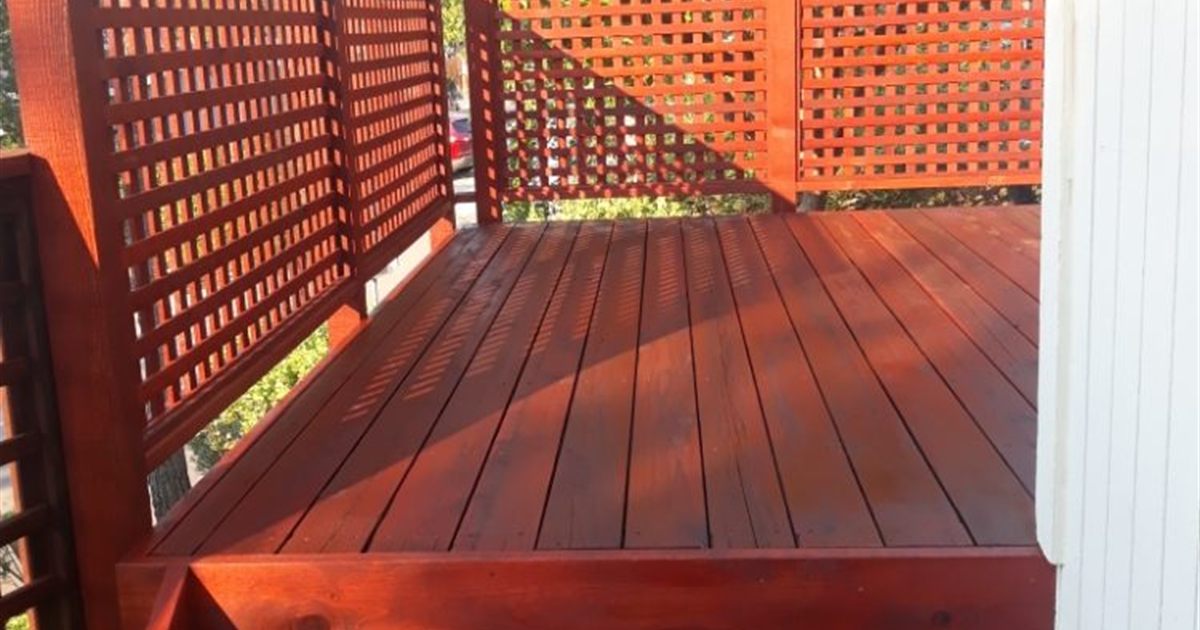
The cedar vs composite decking question comes down to one trade in Seattle: cedar costs less on day one and gives you real wood, but you’ll re-stain it every 2–3 years for as long as you own it. Composite costs 30–50% more upfront and never asks for anything but a wash. In a city that gets 37 inches of rain across 150+ wet days a year, that maintenance gap is wider than it would be almost anywhere else in the country, and it’s why most of our clients who start out wanting cedar end up choosing composite once they see the 25-year math.
We install both, we’re happy building either, and here’s the honest comparison.
Upfront Cost: Cedar Wins, Clearly
For a typical 300 sq ft Seattle deck, professionally built:
| Cedar | Composite | |
|---|---|---|
| Installed cost per sq ft | $35–$60 | $45–$85 |
| Typical 300 sq ft project | $10,500–$18,000 | $13,500–$25,500 |
| Boards’ share of the cost | Lower | Higher (framing is the same) |
The framing, footings, railings, and labor underneath are nearly identical, the price gap is almost entirely the boards. If the budget is fixed and the choice is a smaller composite deck or the cedar deck you actually want, cedar is a legitimate answer.
Maintenance: Where Seattle Changes Everything
This is the deciding factor for most people, so it deserves real numbers rather than a hand-wave.
A cedar deck in Seattle needs to be cleaned, brightened, and re-stained every 2–3 years. Each cycle means either $700–$2,000 for a pro or a full weekend of your own labor, and critically, a stretch of 3+ dry days with moderate temperatures. Anyone who’s tried to schedule outdoor staining around a Seattle forecast knows how small that window is: realistically late July through mid-September. Miss a year because life happened, and the boards start graying and checking; miss two cycles and water gets into the grain, which in our climate is the start of rot.
Composite maintenance is a bucket of soapy water and a stiff brush once or twice a year, mostly to knock down the pollen film and whatever the crows dropped. That’s the entire list. No sanding, no stripping, no watching the radar.
Over a 25-year life, a cedar deck will go through 8–12 staining cycles. Even at the DIY end, that’s $6,000–$10,000 in materials and pro help, which quietly erases cedar’s upfront savings and then some.
Put the two timelines side by side for a typical 300 sq ft deck and the picture is stark:
| Year | Cedar | Composite |
|---|---|---|
| 0 | $10,500–$18,000 built | $13,500–$25,500 built |
| 2–3 | First re-stain: $700–$2,000 | Wash it |
| 5 | Second re-stain | Wash it |
| 8 | Third re-stain + first board repairs | Wash it |
| 12–15 | Fifth/sixth re-stain; railing and stair boards often replaced | Wash it |
| 20–25 | Deck is at end of life or close | Still under fade & stain warranty |
The crossover point (where composite’s total cost of ownership drops below cedar’s) usually lands between year 6 and year 10 in Seattle, depending on whether you stain it yourself. Everything after that is composite pulling ahead.
What We Actually See at Year 10
Numbers are one thing; here’s the field version, from crews that repair as many decks as they build. A ten-year-old maintained cedar deck in Seattle looks great and has another decade in it, we see them in Magnolia and Laurelhurst, usually owned by retired engineers with staining calendars. A ten-year-old unmaintained cedar deck is gray, checked, soft at the board ends, growing moss in the shade lines, and frequently hiding worse news in the framing. That’s the majority case, and it’s not a character flaw, it’s what happens when maintenance requires weather this city doesn’t provide.
A ten-year-old composite deck from a major brand mostly just looks like a slightly duller version of its first summer. The problems we do find on composite decks that age badly are almost always underneath (framing and fastener shortcuts) not the boards themselves.
A Note on Cedar Grades (Because Quotes Hide Here)
If you’re comparing cedar quotes and one is suspiciously cheap, the grade is usually why. “Cedar decking” spans everything from knotty, flat-sawn boards that will check and shed splinters within a few seasons to clear vertical-grain stock that lays down flat and stays that way. For Seattle decks we quote clear or architect-grade knotty at minimum, in this climate, the knots and wild grain of budget boards are exactly where water gets in first. Expect clear cedar to add $3–$8 per square foot over knotty. It’s worth it; a great stain job on bad boards is still bad boards.
Composite has an equivalent trap (bargain uncapped boards) but the mainstream capped lines from major brands are far more consistent than cedar’s grade spread.
Moisture and Rot: The 37-Inch Question
Cedar is genuinely rot-resistant, the Western Red Cedar Lumber Association isn’t wrong about its natural durability, and it’s why cedar was the PNW standard for generations. But resistant isn’t immune. In Seattle we see cedar fail in a predictable pattern: shaded areas that never fully dry, board ends where cuts weren’t sealed, spots under planters, and anywhere moss establishes. North-facing decks in tree-heavy neighborhoods age twice as fast as sunny south-facing ones.
Capped composite doesn’t play this game. The polymer shell doesn’t absorb water, so there’s nothing for rot to start on. Moss and algae can still grow on the surface film of dirt (nothing in Seattle escapes moss) but it rinses off rather than rooting into the grain.
One thing that’s true for both: the pressure-treated framing underneath is still wood. Stainless fasteners (galvanized ones streak and corrode here), joist tape, and real ventilation matter regardless of which board you pick. A composite deck over a rotting frame is still a failed deck.
Heat, Feel, and Looks
Three quicker points, honestly stated:
- Heat: dark composite boards get noticeably hot in direct summer sun, enough to matter for bare feet and dog paws on a south-facing deck in August. Cedar stays cooler. Lighter composite colors close most of the gap.
- Feel: cedar is real wood and feels like it, it also splinters as it ages, which matters with kids. Composite never splinters.
- Looks: fresh-stained cedar is beautiful in a way composite still can’t fully match up close. But “fresh-stained” is the operative phrase, compare year-2 cedar to year-2 composite and the ranking usually flips.
Sustainability: A Genuine Point for Cedar
If environmental footprint is part of your decision, cedar has a real case that often gets drowned out by composite marketing. Western red cedar is a regionally grown, renewable, biodegradable material with low embodied energy, it grows a ferry ride from your house, and at end of life it composts instead of going to a landfill. Responsibly sourced (look for FSC certification), it’s arguably the greenest decking you can buy.
Composite’s counterargument is recycling: major brands build boards largely from reclaimed plastic film and waste wood fiber, diverting real tonnage from landfills, and the boards’ 25–30 year life means less frequent replacement. But composite doesn’t biodegrade, and recycling options for old boards are still limited. Call this category a split decision that depends on which environmental value you weight more, renewable sourcing or waste diversion.
Resale and Lifespan
A well-kept cedar deck lasts 15–25 years in Seattle; composite runs 25–30, backed by manufacturer fade-and-stain warranties of 25–50 years depending on the line. Buyers and inspectors here know the climate: a composite deck with a transferable warranty is a selling point, while an aging cedar deck often shows up on inspection reports as a future project. Industry groups like NADRA recommend annual inspections either way, wet-climate decks earn their reputation for hidden problems.
The Verdict
Choose cedar if:
- Upfront budget is the constraint and you want maximum deck for the money
- You genuinely enjoy (or will genuinely schedule) the staining ritual every 2–3 years
- Real wood underfoot matters more to you than convenience, some people are wood people, and we get it
Choose composite if:
- You’re keeping the house 10+ years, the lifetime math favors composite almost every time in Seattle
- The deck is shaded, north-facing, or under trees, where cedar maintenance gets punishing
- You want the deck to be a place you use, not a thing you maintain
If you’re leaning composite, the next question is which brand and line, our Trex vs. TimberTech comparison covers that. And for how each material stacks up against IPE and PVC too, start with our full guide to the best decking material for Seattle’s wet climate.
Frequently Asked Questions
Is cedar or composite better for Seattle rain?
Composite handles Seattle rain better, its polymer cap doesn’t absorb moisture, so it can’t rot. Cedar is naturally rot-resistant and performs well if it’s re-stained every 2–3 years, but in constant PNW moisture, missed maintenance turns into rot faster than in dry climates.
How often does a cedar deck need staining in Seattle?
Every 2–3 years, with cleaning in between. Seattle’s moisture breaks down stain faster than drier climates, and the dry window for applying it well runs roughly late July through mid-September.
Is composite decking cheaper than cedar in the long run?
Usually, yes. Cedar saves $3,000–$7,000 upfront on a typical Seattle deck, but 8–12 staining cycles over 25 years cost more than that back. Composite’s higher day-one price buys out the maintenance entirely.
Can I replace cedar boards with composite on my existing frame?
Sometimes. The frame has to be structurally sound and correctly spaced, composite typically requires 16” on-center joists or tighter, while older cedar decks were often framed at 24”. In Seattle, frames under 15+ year-old cedar decks usually have moisture damage that makes reframing the smarter spend. We inspect before quoting a re-deck either way.
Does composite decking get too hot for bare feet?
Dark composite in direct summer sun can, yes. On south-facing Seattle decks we steer clients toward lighter colors, which stay meaningfully cooler. Shaded and north-facing decks rarely have the issue.
Get a Price on Both
The cleanest way to settle cedar vs composite is two real numbers for your actual site. We’ve built 1,250+ decks across Seattle since 2008 (cedar decks and composite decks alike) with an in-house crew, SDCI permits handled for you, and a 10-year transferable structural warranty on every build.
Call (425) 928-1172 for a free same-day on-site quote, and we’ll price your deck both ways so you can decide with real figures.