
Composite Decking Pros and Cons (An Honest Breakdown)
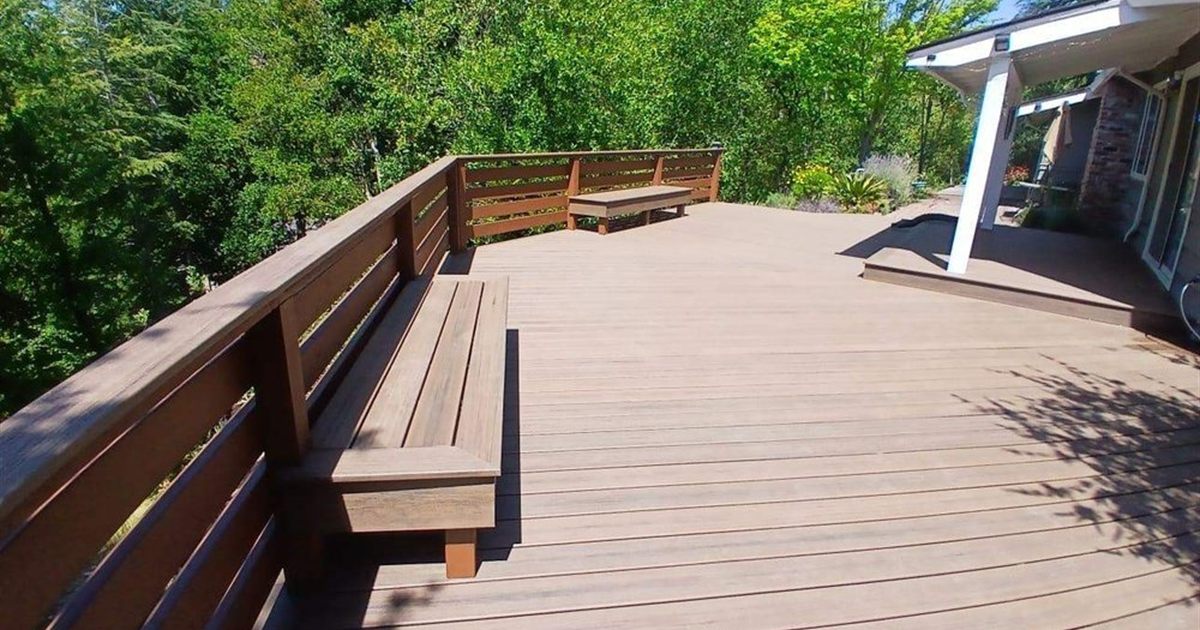
You’ll find plenty of composite decking pros and cons lists written by people selling composite decking. This one’s different in exactly one way: we install composite and cedar and hardwood across Seattle, we make our living either way, and we’ve seen every one of these pros and cons play out on real decks through seventeen years of PNW winters. Composite is the right call for most (not all) of the 1,250+ decks we’ve built since 2008. Here’s the unvarnished version.
The Pros (and Why They’re Bigger in Seattle)
1. Maintenance drops to nearly zero. This is the headline and it deserves to be. No staining, no sealing, no sanding, a soap-and-water wash once or twice a year. In a city with 37 inches of annual rain and a staining window that’s realistically eight weeks long, this pro is worth more here than almost anywhere in the country. Wood-deck owners in Seattle don’t skip maintenance because they’re lazy; they skip it because the weather makes it genuinely hard to schedule. Composite deletes the problem.
2. It can’t rot. The wood fibers in a capped composite board are sealed inside a polymer shell, so the failure mode that kills Seattle decks (moisture soaking into grain, then rot) has no way in. The cap technology Trex and others use is precisely why manufacturers can offer the warranties they do.
3. Warranties run 25–50 years, and transfer. Major-brand fade-and-stain warranties start at 25 years on entry lines and reach 50 on premium ones. They transfer to the next homeowner, which turns your deck into a documented asset at sale time rather than an inspector’s line item.
4. No splinters, ever. Sounds minor until you have kids, dogs, or bare feet. Aging wood decks splinter; composite physically can’t.
5. Color consistency. The board you pick is the deck you get, uniformly, and it holds. No blotchy re-stain jobs, no mismatched replacement boards five years in.
6. It’s a system, not just boards. Composite comes with a full ecosystem, matching fascia, riser boards, hidden fasteners that leave a screw-free surface, integrated LED lighting, and railing lines designed to pair with the decking. Some boards can even be heat-formed into curves, which is how those rounded deck edges you see in magazines get built. Building the equivalent in wood means improvising every one of those details. For a deck that’s meant to be an outdoor room rather than a platform, the system is half the value.
What “Near-Zero Maintenance” Actually Means
Since we’re being honest: composite isn’t no maintenance, it’s a different league of maintenance. The realistic annual list for a Seattle composite deck is a soap-and-water wash each spring (pollen, algae film, whatever winter left), clearing debris out of the board gaps so drainage keeps working (pine needles are the usual culprit under our tree cover) and a ten-minute walk-around checking railing connections and looking underneath at the frame. That’s two hours a year, most of it with a hose in your hand. Compare that against a wood deck’s staining calendar and the marketing phrase earns itself; just don’t let “maintenance-free” talk you out of ever looking at the deck again, because the frame underneath is still wood and still deserves the annual glance.
The Cons: Real Ones, Not Brochure Cons
1. The upfront cost is genuinely higher. Expect $45–$85 per square foot installed in Seattle versus $35–$60 for cedar. On a 300 sq ft deck that’s roughly $3,000–$8,000 more on day one. The lifetime math usually favors composite once you price 8–12 cedar staining cycles, but “usually” isn’t “always,” and if you’re selling in three years, cedar’s economics can win.
2. Dark boards get hot. In direct summer sun, dark composite reaches temperatures that are uncomfortable barefoot. South- and west-facing Seattle decks feel this in July and August. Lighter colors mitigate most of it; PVC boards run cooler still. It’s a real limitation, pick colors with your sun exposure in mind, not just your siding.
3. It’s not wood, and up close you can tell. Grain embossing has gotten impressively good, but composite has a repeating pattern and a slightly synthetic warmth underfoot. If running your hand across real cedar grain matters to you, no composite board will scratch that itch, and we’d rather tell you that now than after installation. (Our cedar deck service exists for exactly these clients.)
4. It’s not structural. Composite is a surface material only. Your joists, beams, and posts are still pressure-treated lumber, and in Seattle’s climate the frame is where decks actually fail first, corroded fasteners, unflashed ledgers, unventilated framing. A composite deck built on a bad frame is a bad deck with nice boards. This is also why “composite = maintenance-free deck” oversells it: the boards are maintenance-free; the structure still deserves the annual inspection that NADRA recommends.
5. It moves with temperature. Wood swells with moisture; composite expands and contracts with heat, noticeably more than lumber along the board’s length. That’s an installation problem, not an ownership one, but it’s why composite has strict end-gapping and fastening specs, and why decks installed tight in cool weather show buckled boards after their first hot week. If you’re getting bids, ask how the crew handles expansion gaps; the answer tells you a lot.
6. Cheap composite is cheap. The bargain lines that made composite’s bad reputation in the 2000s (uncapped boards that stained, faded, and grew mold) still have descendants at the bottom of the market. The gap between a $2.50 board and a $5 board is much bigger than the price suggests. If the budget forces bottom-tier composite, quality cedar is often the better buy.
The 25-Year Math, Worked Out
“Is it worth it” deserves actual numbers, so here’s a typical 300 sq ft Seattle deck, both ways:
Cedar route: $10,500–$18,000 to build, then re-staining every 2–3 years at $700–$2,000 per cycle. Call it nine cycles over 25 years at an average $1,200 (another $10,800) plus realistic board and railing repairs in the later years. Total: roughly $22,000–$30,000, and at year 25 the deck is at or near end of life.
Composite route: $13,500–$25,500 to build, then cleaning supplies. Total: roughly $14,000–$26,000, and at year 25 the boards are still inside their fade-and-stain warranty.
The break-even usually lands between year 6 and year 10. Before that, cedar is genuinely cheaper; after that, composite pulls ahead and never looks back. Which is why the honest version of “is composite worth it” is a question about you, not the material: how long will you own this house, and will you actually stain wood on schedule in a city that gives you eight good staining weekends a year?
How to Buy Composite Without Getting Burned
The material is good; the buying process is where people lose money. Four rules from our side of the table:
- Judge samples on your site, not in a store. Board colors shift dramatically between showroom lighting and a gray Seattle afternoon. Any decent contractor will leave samples with you for a week.
- Get the line name in writing, not just the brand. “A Trex deck” spans a 2× price range. Quotes that just say “composite decking” are how bottom-tier boards get sold at mid-tier prices.
- Ask how the frame is protected. Joist tape, stainless fasteners, ventilation plan. If the answer is a shrug, the boards’ 50-year warranty will outlive the structure by decades.
- Confirm certified installation. Both major brands offer enhanced warranties (including labor coverage) when certified contractors do the install. It costs you nothing to ask and is worth real money in year 12.
So Is Composite Decking Worth It?
For most Seattle homeowners, yes, and the reason is our climate, not the marketing. The two things composite does best (shrug off moisture, eliminate maintenance) line up exactly with the two things Seattle punishes hardest. That’s why roughly two-thirds of the decks we build now are composite.
Worth it: homeowners keeping the house 7+ years, shaded or tree-covered lots, anyone who honestly knows they won’t re-stain wood on schedule, families who want a deck that’s furniture rather than a hobby. It’s also the pragmatic pick for rentals and ADUs, where nobody is going to maintain wood and the deck just needs to keep working for a decade without a phone call.
Not worth it: strict day-one budgets better served by good cedar, wood purists who’ll resent the plastic feel every time they step outside, and anyone being upsold bottom-tier boards at premium-tier prices.
If you’ve landed on composite, your next two reads are which brand, Trex vs. TimberTech, and, for the full field including cedar, IPE, and PVC, our guide to the best decking material for Seattle’s wet climate.
Frequently Asked Questions
What are the main disadvantages of composite decking?
Higher upfront cost than wood ($45–$85/sq ft installed in Seattle), heat buildup on dark boards in direct sun, a look and feel that’s close to (but not) real wood, and the fact that it’s only a surface material: the wood frame underneath still needs proper construction and periodic inspection.
How long does composite decking really last?
25–30 years is a realistic service life in the PNW, with manufacturer fade-and-stain warranties of 25–50 years depending on the line. The deck’s frame, not its boards, usually determines whether it gets there, which is why build quality matters more than brand.
Does composite decking get moldy in Seattle?
Mold and moss can grow on the dirt and pollen film that accumulates on any outdoor surface in Seattle, but on capped composite it stays on the surface and washes off. It can’t root into the board the way it does into weathered wood grain.
Is composite decking slippery when wet?
Modern textured composite is comparable to wood when wet, and better than smooth-worn old lumber. No decking is slip-proof in a Seattle November, texture choice and keeping the surface clean matter more than the material category.
Can composite decking be installed over an existing frame?
Sometimes. The frame must be structurally sound, correctly spaced for composite (often 16” on center or tighter), and worth keeping, in our experience most Seattle frames under 15-year-old decks aren’t. We inspect before quoting either way.
Get a Straight Answer for Your Deck
Bring us your site and your budget, and we’ll tell you whether composite earns its premium there, and show you exactly which boards we’d use. We’re TrexPro Platinum and TimberTech Pro certified, licensed (WA #DBSEAT123KP), bonded and insured, with a 10-year transferable structural warranty on every composite deck we build.
Call (425) 928-1172 for a free same-day on-site quote. 4.9★ across 312+ reviews, and we’ll happily talk you out of composite if your site says otherwise.