
Deck Cost in Seattle (2026): What a New Deck Really Costs
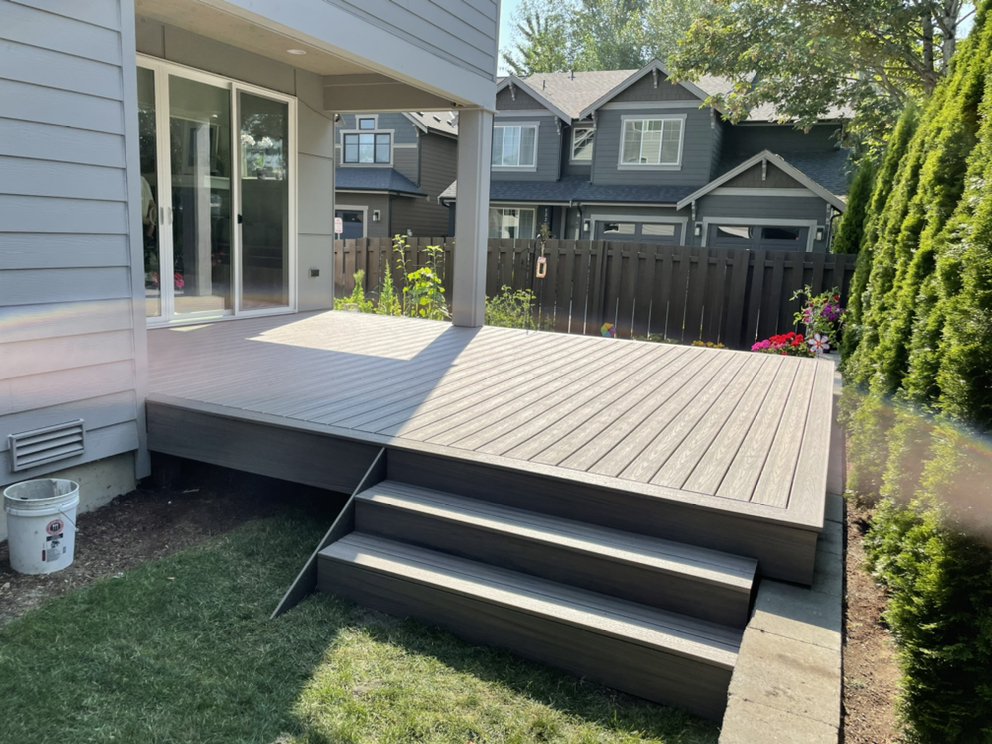
Deck cost in Seattle in 2026 typically runs from about $35 to $85 per square foot installed for a cedar or composite deck on a straightforward site. For a common 300 square foot deck, that works out to roughly $12,000 to $28,000, with cedar toward the lower end and composite toward the upper.
Those are planning ranges from our own work this year. They are not a quote for your project. A second-story deck, a steep lot, a long stair, or a glass railing can push the same square footage well past $40,000, and a small low platform can come in under $10,000.
The rest of this guide shows where the money goes, so you can estimate your own project with some confidence before you ask for bids.
How much does a deck cost in Seattle?
Decking material is the first variable most people choose, so it is a useful starting point. These ranges are for a single-level deck on an accessible, fairly level site.
| Decking material | Installed cost per sq ft (2026) | 300 sq ft deck |
|---|---|---|
| Pressure-treated lumber | $30 to $50 | $9,000 to $15,000 |
| Western red cedar | $35 to $60 | $10,500 to $18,000 |
| Capped composite | $45 to $85 | $13,500 to $25,500 |
| PVC | $55 to $95 | $16,500 to $28,500 |
| Tropical hardwood such as ipe | $70 to $130 or more | $21,000 to $39,000 or more |
What these figures include: footings, pressure-treated framing, decking, hardware and fasteners, and labor.
What they leave out: removal of an existing deck, railings, stairs beyond a single step, permit fees, design or engineering, and sales tax. Those items are covered below, because they are where estimates usually go wrong.
Why deck cost per square foot in Seattle is only a starting point
Cost per square foot is a convenient shorthand, and a blunt one. It treats a deck as if it were flooring. A deck is a small structure, and much of its cost has little to do with its area.
Three things distort the per-square-foot figure.
Fixed costs. Layout, mobilization, the ledger connection to the house, permit drawings, and inspections cost about the same on a 150 square foot deck as on a 350 square foot one. Small decks therefore cost more per square foot.
Perimeter items. Railings and stairs are priced by length and height. A long narrow deck has much more railing per square foot than a square one.
Height. The same surface area costs more as it rises: taller posts, larger footings, bracing, more railing, a longer stair, and slower work from ladders or scaffolding.
Use square-foot ranges to set a budget band. Use an itemized quote to make decisions.
Cedar deck cost in Seattle
Western red cedar remains a common choice here. It is grown regionally and has natural decay resistance.
For 2026, a cedar deck on a simple site typically prices at $35 to $60 per square foot before railings and stairs. Grade drives the spread. Clear or near-clear boards cost noticeably more than knotty grades, and they hold up better in a wet climate because knots and irregular grain are where water gets in.
Cedar’s lower purchase price comes with an ongoing cost. In Seattle it needs cleaning and re-staining every two to three years to stay sound. Our guide to deck staining cost covers what that maintenance runs.
Composite deck cost in Seattle
Capped composite decking typically prices at $45 to $85 per square foot installed in 2026, before railings and stairs. The range reflects the product line. Entry-level boards from the major brands sit at the low end, and premium lines with more realistic grain and longer warranties sit at the top.
Two details affect composite pricing beyond the boards themselves. Manufacturers limit joist spacing, commonly to 16 inches on center and closer for diagonal layouts, so the frame can need more lumber. Hidden fastener systems and picture-frame borders also add labor.
The structure beneath composite is the same pressure-treated framing used under wood. The price difference between a cedar deck and a composite one is almost entirely the surface and trim.
What the structure costs, and why Seattle framing is heavier
Homeowners comparing Seattle quotes with national averages are often surprised by the gap. Part of it is labor rates. Part of it is the structure itself.
Washington requires decks to be designed for a live load of 60 pounds per square foot, compared with 40 in the unamended national code. That means larger or more closely spaced joists, heavier beams, and bigger footings than the examples in most online guides. Our article on deck footing requirements shows how footing sizes follow from that load.
Attached decks also need a properly flashed and bolted ledger and hold-down hardware that ties the deck to the house against sideways forces. This is skilled work, and it is not where to look for savings.
Ground-level versus raised decks
Height is the largest single driver after material.
Ground-level decks, up to about 18 inches above grade, are the least expensive to build. They need short posts or none, no guard, and only a step or two. In Seattle a deck at or under 18 inches generally does not need a building permit either. The trade-off is moisture: framing close to the ground has to be detailed for drainage and airflow.
Mid-height decks, roughly 2 to 6 feet, need a permit, a full guard once the drop exceeds 30 inches, and a real stair. Expect the total to land well above the base square-foot figure once those are added.
Second-story decks, 8 feet and higher, add tall posts, larger footings, bracing, a long stair that may need a landing, and more involved permitting. In Seattle, a deck more than 8 feet above the ground requires full plan review. A deck at this height costs substantially more than the same deck built low, as the sample projects below show.
Railing and stair additions
Railings are frequently the second-largest line on a quote. Typical 2026 installed ranges per linear foot in Seattle:
| Railing type | Installed cost per linear foot |
|---|---|
| Wood, cedar or pressure-treated | $45 to $75 |
| Composite | $60 to $100 |
| Aluminum | $70 to $120 |
| Stainless cable | $100 to $180 |
| Glass panel | $150 to $250 or more |
A 300 square foot deck with railing on three sides needs around 50 linear feet. At those rates the railing alone ranges from about $2,250 in wood to $12,500 in glass.
Stairs depend on the height they have to climb. A short run of two or three steps commonly costs $500 to $1,200. A full flight from a mid-height deck typically runs $1,500 to $4,000, and more with a landing, composite treads, or railings on both sides. The dimensions are set by code, which is covered in our deck stair code guide.
Demolition of an existing deck
If an old deck has to come out first, add removal and disposal. For a typical residential deck this runs $800 to $2,500, depending on size, height, how it was built, and how far debris has to be carried to the truck.
Concrete footings that must be broken out, decks over finished surfaces that need protection, and sites with no vehicle access all push toward the top of that range or beyond it.
Permitting and design considerations
A deck more than 18 inches above grade needs a permit from the Seattle Department of Construction and Inspections (SDCI). Most qualify for a simpler permit type, while tall, large, or rooftop decks and those in environmentally critical areas need full plan review. The Seattle deck permit guide explains which applies.
SDCI fees are calculated from project value, not charged as a flat amount. Using SDCI’s 2026 fee table, a deck valued between $12,000 and $28,000 on the simpler permit type comes to roughly $750 to $1,150 in city fees. Full plan review, a pre-application site visit, or hourly geotechnical review costs more.
Drawings are a separate cost from the city’s fees. Simple decks need a site plan and framing details. Complex designs, glass guards, unusual foundations, and steep sites can require an engineer.
Difficult Seattle sites and restricted access
Site conditions are the least predictable part of a deck budget, and Seattle has plenty of them.
- Slopes. Hillside lots need taller posts on the downhill side, larger or deeper footings, and sometimes engineered foundations.
- No vehicle access. Many older neighborhoods have narrow side yards or stairs from the street. Every board and every bag of concrete is carried by hand, which adds labor hours.
- Critical areas and shorelines. Steep slope, landslide-prone, and shoreline properties can require geotechnical reports, extra review, and specific construction methods.
- Tight lots. Setbacks and lot coverage limits can force a design that is more complicated than a simple rectangle.
- What is underneath. Decks over patios, basements, drainage lines, or tree roots need careful footing placement.
A site visit is the only reliable way to price these. Photos help, but they rarely show slope, soil, or access accurately.
Sample projects: how scope changes the price
These examples show how the factors above combine. All are 2026 planning ranges for Seattle, before sales tax.
| Project | Scope | Planning range |
|---|---|---|
| Small ground-level platform | 144 sq ft cedar, under 18 inches high, no railing, one step, no permit required | $7,500 to $11,000 |
| Low cedar deck | 300 sq ft cedar, about 2 feet high, short stair, no guard required, simple permit | $12,000 to $18,000 |
| Mid-height composite deck | 300 sq ft capped composite, about 4 feet high, 50 feet of composite or aluminum railing, one stair flight, simple permit | $20,000 to $34,000 |
| Second-story composite deck | 300 sq ft composite, 9 to 10 feet high, aluminum railing, full stair with landing, plan-review permit | $30,000 to $48,000 |
| Multi-level custom deck | 400 sq ft PVC or hardwood on two levels, cable or glass railing, lighting, sloped site | $45,000 to $75,000 or more |
The second and fourth projects have the same square footage. The second-story version can cost more than twice as much.
Why two decks with the same square footage cost different amounts
When two quotes for “a 300 square foot deck” are far apart, the reason is nearly always in this list:
- Height above grade, which changes posts, footings, bracing, railing, and stairs
- Decking material and grade, from knotty cedar to premium PVC
- Railing length and type, which can vary by a factor of five
- Stairs, from one step to a full flight with a landing
- Shape, since angles, curves, borders, and multiple levels add cutting and waste
- Site access and slope
- Demolition of an existing structure
- Permit path, engineering, and drawings
- What is included, such as fascia, skirting, lighting, joist tape, and stainless fasteners
When comparing bids, line them up item by item. A lower price that omits the permit, the railing, or the demolition is not a lower price.
How to estimate the cost to build a deck in Seattle
A workable method for a first budget:
- Multiply the planned area by the per-square-foot range for your material
- Add railing by the linear foot wherever the deck will be more than 30 inches above the ground
- Add stairs based on the height they need to climb
- Add demolition if there is an old deck
- Add permit fees and any design or engineering
- Add a contingency for site conditions, and sales tax, which is over 10 percent in Seattle
That gives a range wide enough to be honest and narrow enough to plan around. An on-site measurement turns it into a real number.
When you are ready for that step, our deck installation service in Seattle page explains what the site visit covers and what a written quote includes.
Frequently Asked Questions
How much does a 12x12 deck cost in Seattle?
A 12 by 12 foot deck is 144 square feet. As a 2026 planning figure, a simple ground-level cedar platform of that size with no railing commonly falls between $7,500 and $11,000. That is a higher cost per square foot than a larger deck, because mobilization, layout, footings, and hardware do not shrink in proportion to the size. Height, railings, stairs, and composite decking all raise the figure.
Is a composite deck worth the extra cost in Seattle?
It depends on how long you will own the house and how you feel about maintenance. Composite costs more to install, and it removes the cycle of cleaning and re-staining that cedar needs every few years in a wet climate. Over a long ownership period, the avoided maintenance usually closes much of the price gap. The frame underneath is the same pressure-treated lumber either way.
Does a deck quote in Seattle include the permit?
It varies by contractor, so ask. A complete quote should say whether it includes the drawings, the SDCI application, the permit fees themselves, and any engineering. SDCI fees are based on project value, so they differ from one deck to the next. Decks no more than 18 inches above grade generally do not need a building permit.
What is the cheapest way to build a deck in Seattle?
Keep it low, rectangular, and modest in size. A deck under the height where a guard is required needs no railing, a deck close to the ground needs only a step or two, and a simple rectangle wastes less material and labor than angles and curves. Pressure-treated decking costs the least up front, though it needs regular maintenance and has a plainer look than cedar.
When is the best time of year to build a deck in Seattle?
Decks are built year-round here. Late spring through early fall offers drier conditions for excavation, concrete, and any staining. Because that is when most homeowners want the work done, schedules fill early. Planning and permitting over the winter puts a project in line for a spring or early summer start.
Planning a new deck? Review our Seattle deck installation service and what an on-site quote includes.
Deck installation service or call (425) 928-1172